ELISA vs Rapid Test Kits: Which Is Better for Large-Scale Screening?
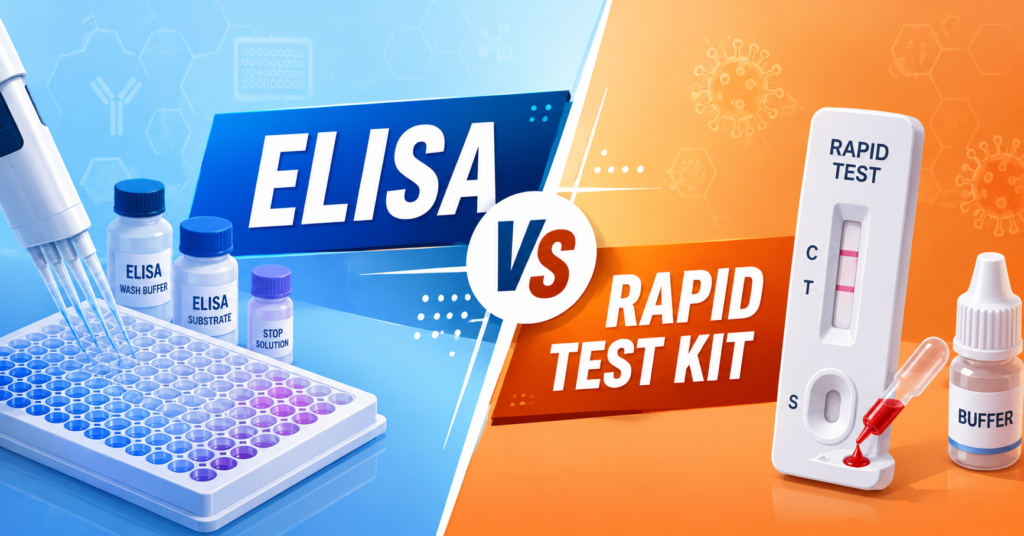
ELISA vs Rapid Test Kits: Which Is Better for Large-Scale Screening? Recent Posts ELISA vs Rapid Test Kits: Which Is Better for Large-Scale Screening? Acidity or H. Pylori? When Stomach Pain Needs a Simple Test? 5 Common Urine Test Mistakes That Affect Accuracy & Results do you need our help? we always give the best for you 011-45661377 for more info Introduction Big screening programs for infections like Dengue and HIV need more than the quickest test. ELISA and rapid test kits do the work in different ways. ELISA fits well in labs that can run many samples at once. Rapid tests help most when results are needed right away and there is little equipment. The best pick depends on where testing happens, how far along the illness is, and how many samples are waiting. What Is the Main Difference Between ELISA and Rapid Test Kits? ELISA is an enzyme based test. A person’s sample reacts with the matching antigen or antibody. Then a signal is read by an ELISA device. Using a microplate helps the lab run many samples and include controls in one set. Astam Diagnostics Dengue NS1 ELISA is made for lab use with serum or plasma. It uses a 96 well layout, which supports screening in bulk. Rapid test kits usually rely on immunochromatography. They can show results by eye, even without a full ELISA setup. Astam’s Dengue IgG/IgM Rapid Test checks IgG and IgM antibodies. Results are typically ready in about 15 to 20 minutes. That speed makes it useful when access and turnaround time matter. Why Is ELISA Suitable for High-Volume Laboratory Screening? A 96-well ELISA plate can fit many samples in one run. The readout comes from optical density and the lab uses the instrument signal to interpret results. Dengue NS1 ELISA also has value early in infection. NS1 can show up before antibodies do. Astam’s PRATHAM Dengue NS1 Antigen ELISA is made for serum and plasma testing. For HIV screening, Astam also has PRATHAM 4th Generation HIV 1 & 2 ELISA. It checks both HIV antibodies and p24 antigen, so lab screening can happen earlier. When Are Rapid Test Kits the Better Choice? Rapid test kits often fit better in certain situations. When speed, travel needs, and easy access matter more than batch testing, they help. Rural screening camps can face limits. Mobile medical teams may not have an ELISA reader. Primary health centers might lack lab space and tools. During outbreaks, this difference becomes clear. With rapid kits, clinicians can test near the patient. That supports quicker next steps, like referral or follow-up tests. Astam’s Dengue NS1 Rapid Test gives qualitative NS1 antigen results in roughly 15 to 20 minutes. The Dengue IgG/IgM Rapid Test works with whole blood, serum, and plasma. Which Is More Cost-Efficient for Government Screening Programmes? For government screening programmes, look at the full cost. Count the total cost per result that can be used and reported. Do not focus only on what one kit costs to buy. ELISA can make sense when a lab already has the needed equipment. It also helps when the lab runs many samples at once. You still have to include infrastructure, trained staff, calibration, and quality checks. Rapid kits can lower the need for extra lab setup. They may work well for smaller sites and decentralized work. Procurement teams should weigh testing numbers, storage needs, staffing, available tools, and how fast results come back. Should Laboratories Choose ELISA or Rapid Tests for Dengue and HIV? For dengue and HIV, there is no single best option. ELISA is usually the better match for central labs that process large volumes. It fits batch work and instrument-based reading when standard workflows are already in place. Rapid tests work well when screening is spread out. They fit outreach efforts and community settings. Results come fast. These places often lack strong lab support. If an HIV screening result is reactive, it must be handled under the national testing pathway. The usual confirmation steps also need to be followed, as required by local rules. How Should Procurement Teams Select the Right Diagnostic Kit? Buyers should not focus on only sensitivity and specificity. They should also check the intended setting. The specimen type matters too. Storage needs must be reviewed. Quality-control paperwork counts. Shelf life is important. Supply volume and delivery ability matter. Total cost per test also needs attention. Any regulator rules should be checked as well. Astam Diagnostics makes rapid diagnostic kits and ELISA products. These are made for labs, hospitals, and healthcare providers. The company offers infectious disease rapid tests. It also provides ELISA items for lab use. This covers institutional purchases, business buyers, and government procurement. Conclusion The choice between ELISA and a rapid test depends on where testing happens. It also depends on how much sample is used. Turnaround time matters. So does what infrastructure is in place. In centralized labs, hospitals, blood banks, and research units, ELISA options can fit structured workflows. Astam Diagnostics provides ELISA solutions such as Dengue NS1 ELISA and HIV 4th Generation ELISA. For rural camps and decentralized programmes, PRATHAM rapid diagnostic tests can be more workable for screening. With both options, Astam Diagnostics supports organizations that need coverage in lab and field work. Frequently Asked Questions Q: Is ELISA better than a rapid test for Dengue screening? A: In many cases, ELISA suits centralized work with large sample numbers. Rapid tests can be easier for quick screening in decentralized locations. Q: When should a Dengue NS1 ELISA be used? A: You can use it if the lab has the needed setup and if you must detect the NS1 antigen early, during the first days of illness in people with suspected Dengue. Q: Are rapid HIV tests suitable for large-scale screening? A: Yes. They fit well for community and outreach work. If a test comes back reactive, the result should be handled under the correct HIV testing algorithm, with the required confirmatory steps. Q: How quickly does
Acidity or H. Pylori? When Stomach Pain Needs a Simple Test?

Acidity or H. Pylori? When Stomach Pain Needs a Simple Test? Recent Posts Acidity or H. Pylori? When Stomach Pain Needs a Simple Test? 5 Common Urine Test Mistakes That Affect Accuracy & Results The Golden Hour: How 15-Minute Troponin Tests Save Lives in India do you need our help? we always give the best for you 011-45661377 for more info Introduction Acidity, bloating, burning sensation, and recurrent discomfort are often regarded as a part of normal digestion. But what if these frequent stomach woes conceal a more insidious problem? Helicobacter pylori (H. pylori) is a common bacterial infection associated with gastritis and peptic ulcers. Many who unknowingly suffer from the infection can benefit from testing for H. pylori. Non-invasive testing options for H. pylori include a stool antigen test and are an important step when recommended by a healthcare professional. Is chronic acidity a symptom of H. pylori? While frequent acidity does not necessarily point to an H. pylori infection, persistent symptoms such as burning stomach sensation, bloating, recurrent burping, nausea, loss of appetite and unexplained weight loss should not be overlooked. H. pylori bacteria are notorious for invading the stomach lining, causing gastritis and peptic ulcer disease. If these symptoms persist or recur, it is important to consult a healthcare professional to discuss H. pylori testing. What is H. pylori and how does it impact ailing stomachs? H.pylori is a bacteria that resides in the stomach and is associated with inflammation of the stomach lining. Chronic infection can lead to peptic ulcers and the bacteria is known to contribute to increased risk of serious gastrointestinal conditions. It is important to note that symptoms on their own cannot indicate an H. pylori infection. Proper diagnostic testing is required if infection is suspected. Do you always need endoscopy to test for H. pylori? Endoscopy is not always necessary when looking into H. pylori infection. There are non-invasive treatment options available to both confirm and rule out an H. pylori infection. Upper endoscopy is an invasive procedure wherein a flexible tube is passed through the mouth to view and assess the upper digestive tract. Endoscopy is generally indicated if the doctor suspects the need for a biopsy or if there are other concomitant symptoms needing evaluation. Therefore, it is important to understand that endoscopy is not the only option for H. pylori testing. What is an H. pylori stool antigen test? An H. pylori stool test is a non-invasive method of diagnosing H. pylori infection. The test looks for the antigens of the bacteria in the stool. Being a non-invasive procedure that requires only a stool sample to be provided, a stool antigen test can be a convenient option for H. pylori detection when otherwise indicated. A stool antigen test is also recommended for post-eradication follow-up as per guidelines. Astam Diagnostics offers an H. pylori Antigen Test Kit for rapid qualitative detection of H. pylori antigens in fecal specimens via immunochromatographic assay. As per the manufacturer, the test provides results within 15-20 minutes and is intended for use in clinical laboratories, gastroenterology clinics and hospital laboratories. How is the H. pylori antigen test different from an antibody test? The two tests are vastly different from each other. The H. pylori antigen test is used for the qualitative detection of H. pylori antigens in fecal specimens. On the contrary, the H. pylori antibody test is meant for the qualitative detection of IgM, IgG and IgA antibodies in human serum, plasma or whole blood. Astam Diagnostics H. pylori Antibody Test is a lateral-flow chromatographic immunoassay that provides results within 15-20 minutes. For current H. pylori infection, non-serologic tests such as fecal antigen or urea breath tests are the preferred tests in appropriate circumstances. Antibody testing should therefore be interpreted in a clinical context and should not be used as a substitute for non-serologic tests for diagnosis of active infection. What should you know before taking an H. pylori test? There are several drugs that can interfere with the H. pylori test. Proton pump inhibitors, antibiotics, and bismuth containing drugs need to be discontinued before a test of cure or prior to testing in appropriate circumstances. However, it is important to note that these medications should only be discontinued at the recommendation of a healthcare professional. Furthermore, current ACG guidelines recommend using a fecal antigen test, urea breath test, or biopsy at appropriate intervals to confirm eradication. Conclusion While not all cases of acidity are attributed to H. pylori, persistent gastrointestinal symptoms call for more than a round of antacids. Knowing the possible link between H. pylori, gastritis and ulcers can help you get the treatment you need at the right time. A non-invasive H. pylori stool antigen test can be an important step when considering more invasive procedures. With diagnostic solutions such as the Astam Diagnostics H. pylori Antigen Test, healthcare professionals and laboratories can rely on rapid testing for H. pylori antigen detection. Frequently Asked Questions (FAQs) Q: What is an H. pylori stool antigen test? A: An H. pylori stool antigen test is a non-invasive test that uses a stool sample for the detection of H. pylori antigens. The test is used for diagnosis and, when indicated, post-eradication follow-up testing. Q: Can H. pylori cause stomach ulcers? A: Yes, H. pylori infection can lead to peptic ulcers. However, persistent stomach pain is not enough to confirm an ulcer or H. pylori infection. Medical evaluation and appropriate diagnostic testing are always necessary. Q: Is a stool antigen test less invasive than endoscopy? A: Yes, a stool test is less invasive than an endoscopy procedure. An endoscopy, on the other hand, is an invasive procedure wherein a flexible tube is passed through the mouth to view the upper digestive tract. Endoscopy is generally reserved for when additional evaluation is needed. Q: What is the difference between H. pylori antigen and antibody tests? A: An antigen test detects the antigens of the H. pylori bacteria. An antibody test, on the other hand, is
5 Common Urine Test Mistakes That Affect Accuracy & Results
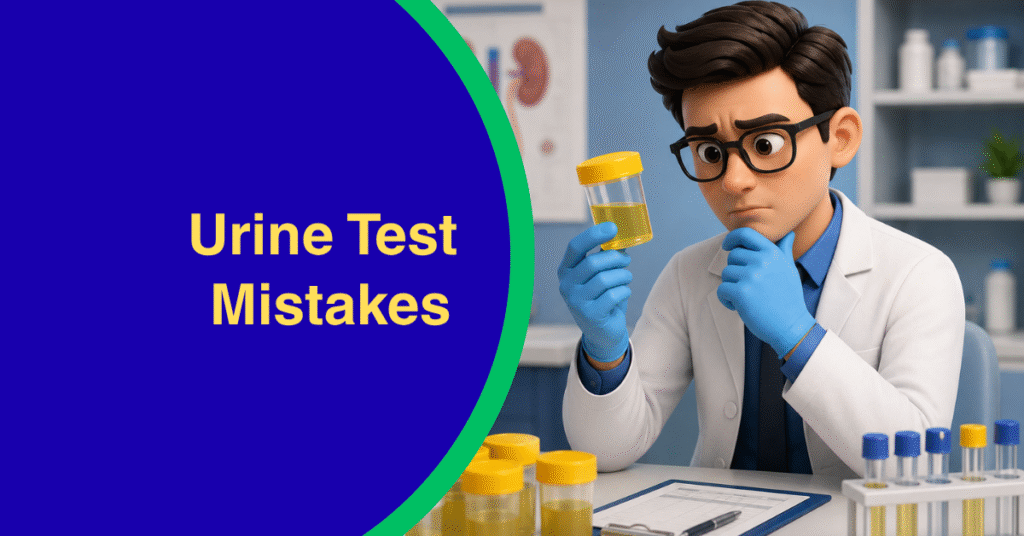
5 Common Urine Test Mistakes That Affect Accuracy & Results Recent Posts 5 Common Urine Test Mistakes That Affect Accuracy & Results The Golden Hour: How 15-Minute Troponin Tests Save Lives in India How OEM Manufacturing Helps in Medical Healthcare Brands do you need our help? we always give the best for you 011-45661377 for more info Introduction Urine tests may seem easy, yet the small steps matter. A wrong step during collection, problems with the strip, delays in reading, or guesswork in the final read can shift the result. This post covers five usual mistakes in urine testing. It also explains why people make those mistakes. You will see what lab staff can do and what everyday users can do to lower the risk of bad readings. We will also talk about storage and why fast reading is key. In the end, we cover how to pick a urine reagent strip. We also note how newer rapid strip formats can help make routine checks more steady. What if the urine sample gets contaminated? The sample quality comes first. If the container is not clean and dry, the test can be thrown off. The same risk exists if the sample touches cleaning agents or other odd substances. Contamination can also occur when the person collects the urine in a careless way. For regular urine testing, use a clean container and follow the right collection steps. Many routine uses ask for a fresh midstream urine sample. Also, do not touch the part of the strip that has the chemical areas. Hand oils, skin moisture, or other matter can get on the strip and change the chemical reaction. In pathology labs, using one clear collection routine can cut down on preventable errors. How can storage ruin a strip? Urine reagent strips have treated areas. Those areas react to specific substances found in urine. The chemicals can be harmed by moisture, high heat, and humid air. Letting strips sit too long out in open air can also weaken them. So it is not enough that a strip is still in its sealed pack. Proper storage is part of keeping the test quality steady. Keep the container shut after you take out a strip. Follow the storage steps set by the maker. Do not use strips that are past the date or that look cracked, torn, or otherwise harmed. For instance, Astam Diagnostics’ Pratham Urine Test Strip 10P should be kept at 2°C to 30°C. The reagent pads also need to be kept dry to avoid moisture exposure. Why does the dipping technique matter more than many users realise? You may not realize it, but the dip method can change the outcome. A urine strip has to meet the sample in the right way. If you dip too long, or if the strip is not fully in the urine, the reagent areas may not react the way they should. After you pull the strip out, the handling also counts. If there is extra urine, it can flow into the spaces between nearby reagent pads. That can make color reading harder and less clear. A better plan is to use the instructions for that exact strip. Do not assume all urine test strips behave the same. Multi-parameter strips rely even more on correct use. Several reagent areas are checked at once, so small errors can affect more than one result. Astam’s Pratham Urine Test Strip 10P targets semi-quantitative results for ten items. These include glucose, bilirubin, ketones, specific gravity, blood, pH, protein, urobilinogen, nitrite, and leukocytes. Because of that, the dipping and the later steps matter a lot when you are checking many parameters. Why can reading the strip too late change the interpretation? Reading the strip too late can shift what the result means. One common error is simple to avoid. Read the strip at the time stated in the directions. After urine touches the pads, chemical reactions keep moving forward. The colors are meant to be judged at set times. If you wait too long, the colors may no longer match the intended timing. If you read the strip right after dipping, the reaction may not finish. If you wait too long, the color can shift in ways that do not match the chart from the maker. A timer helps you hit the right moment, so the urine test results are more likely to be correct. Reading time varies by brand and parameter. For example, Astam’s 10-parameter strip asks for interpretation at 60 seconds. In contrast, Astam’s UTI strip has its own set timing window. So you should use the timing written on the box for that exact strip. Do not apply one rule to all strips. How does picking the correct strip change the process? Not all urine strips are made for the same goal. A multi-parameter reagent strip can be used for general checkups. A strip meant for UTI screening targets markers that relate to urinary tract infections. This is why the purpose of the test matters. In Astam Diagnostics’ urine-testing line, you can find the Pratham Urine Test Strip 10P, Urine Test Strip 2P, and a Urinary Tract Infection (UTI) Test Strip. The UTI strip is made to detect leukocytes and nitrites to support fast UTI screening. Even so, a quick strip should be treated as a screening step. It is not a replacement for lab work in all cases. If you have symptoms or other clinical signs that need more detail, a healthcare professional may suggest extra testing. Conclusion Reliable urine strip results start before the strip is even opened. You need the sample to be collected well, kept properly, and handled with care. The dip must be done correctly, the read time must be watched, and the strip type must match what you are trying to check. In pathology labs, this matters even more because the workflow relies on set routines. In other healthcare settings, the same habits also help. New reagent strips can speed up everyday
The Golden Hour: How 15-Minute Troponin Tests Save Lives in India
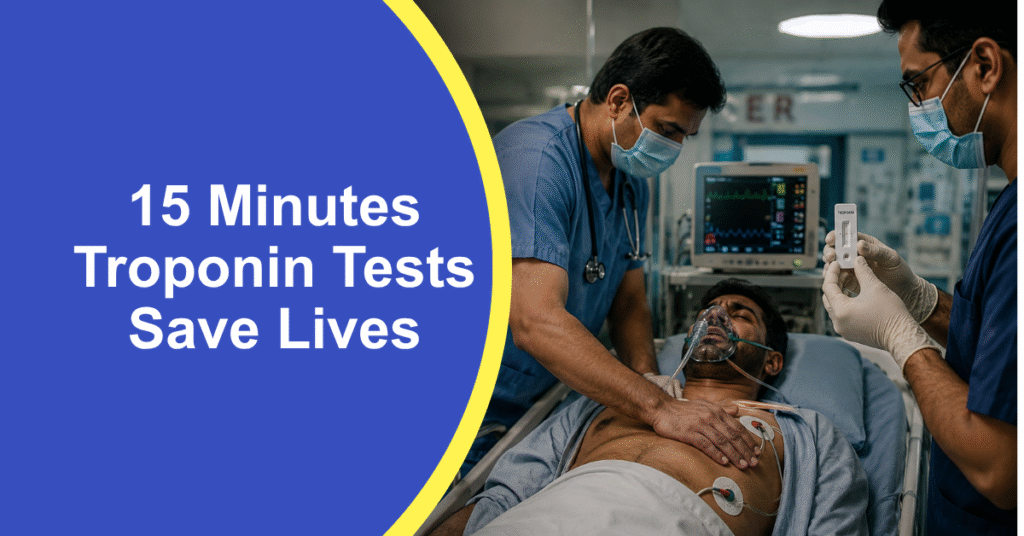
The Golden Hour: How 15-Minute Troponin Tests Save Lives in India Recent Posts The Golden Hour: How 15-Minute Troponin Tests Save Lives in India How OEM Manufacturing Helps in Medical Healthcare Brands Flood Diseases in India: Rapid Testing Guide do you need our help? we always give the best for you 011-45661377 for more info Introduction Could a few minutes make a difference when a heart attack is suspected, like really suspected? In emergency cardiac care, timely assessment can be extremely important, even if it sounds kinda obvious. Not every heart attack gives you that dramatic chest pain, and some cardiac events may show up with less clear symptoms, things like unusual fatigue, breathlessness, nausea, dizziness, or a weird discomfort in other upper body areas. So yeah, awareness and access to suitable diagnostic tools really matter, in a practical sense. In this blog, we will look at why cardiac markers such as Troponin I and Troponin T are significant, how rapid testing can back up emergency assessment, why fast diagnostics can be useful for clinics and laboratories in smaller towns, and how diagnostic manufacturers such as Astam Diagnostics Pvt. Ltd. are helping improve access to rapid IVD solutions in India. Why can silent heart attacks be hard to identify? A silent, or unrecognized, heart attack might not always show the classic symptoms people link with a cardiac emergency. Some people may only feel mild discomfort, or symptoms that get confused with acidity, fatigue, indigestion, or even stress. And that confusion can cause a delay in getting medical help, for sure. For health-conscious individuals, the key point is simple: don’t try to self-diagnose, instead, take unusual or concerning signs seriously. People with cardiovascular risk factors such as diabetes, hypertension, high cholesterol, obesity, a smoking history, or a family background of heart disease may need extra attention to warning signals, not just “wait and see”. Why is Troponin I important when heart muscle injury is suspected? Troponin I is a cardiac biomarker tied to injury of heart muscle cells. When myocardial injury happens, Troponin I can move into the bloodstream, and it becomes an important piece of the clinical assessment for a suspected heart attack. For healthcare professionals, rapid Troponin I testing can bring one more small clue alongside the usual clinical check and ECG results. Astam Diagnostics’ Troponin I Test Kit is shown as a rapid cardiac-marker detection test using blood, serum, or plasma samples, and it states a result time around 15–20 minutes, so it can be useful in busy triage situations where minutes matter. How does Troponin T rapid testing help with emergency cardiac assessment? Troponin T is also a key cardiac biomarker for spotting myocardial injury. A rapid Trop T test may let clinicians get early cardiac-marker information quite fast, especially when someone arrives with symptoms that suggest a possible cardiac event. In other words, it gives a quick, preliminary signal rather than the full picture right away. Astam Diagnostics’ Trop T Test Kit is made for qualitative detection of cardiac Troponin T in whole blood, serum, or plasma, and the company lists an interpretation time of 15–20 minutes. That timing can help when clinicians are trying to decide what to do next, while they still rely on the wider clinical context. Why might rapid cardiac testing be valuable for smaller towns and clinics in India? Access to specialized care is not always the same between big cities and smaller towns. In these places, rapid testing solutions can help clinics get preliminary information without having to wait for samples to be sent far away, processed at a distant laboratory, and then brought back. That’s a big deal when the patient is unstable or when delays could worsen outcomes. For emergency lab technicians, a rapid test supports a more streamlined workflow when used exactly according to its intended instructions. For doctors, the outcome can work like a piece of the larger puzzle, helping guide choices about further evaluation, observation, or referral. Still, rapid cardiac-marker testing should not be treated as a substitute for ECG, clinical examination, full laboratory-based testing, or specialist care whenever those steps are needed. How do other diagnostic markers such as ASO and CRP complement a broader testing portfolio? Cardiac-marker testing is just one part of diagnostic medicine. In other words, healthcare providers also need tests that can help judge infections, inflammation, and a bunch of other clinical situations, you know. Astam Diagnostics offers an ASO Test Kit, its meant to detect Anti-Streptolysin O antibodies and it supports screening linked to recent Group A Streptococcus exposure, plus post-streptococcal complications as well. The wording is a little more direct than it sounds, but the use-case is pretty clear. Then there is the company’s CRP Test Kit , this one is designed for qualitative and also semi-quantitative detection of C-Reactive Protein. It’s generally positioned for inflammation and infection-related testing, not for something else. Why are rapid diagnostic kits important for B2B healthcare buyers? For hospitals, diagnostic laboratories, emergency-care units, distributors, and procurement teams, product availability is just one slice of the decision. They also look at consistency, quality systems, supply capacity, distribution reach, and regulatory compliance, because delays or variability can actually become a problem. Astam Diagnostics says it is an IVD kit and medical-device manufacturer and supplier. It points to ISO 13485:2016 and CE certification, and it says manufacturing is aligned with CDSCO requirements too. The company also highlights PAN-India distribution, bulk production ability, B2B supply capability, and presence across international markets. Conclusion That “golden hour” idea in cardiac emergencies really underlines a core rule: time matters. No single rapid test can replace a full clinical evaluation, still, accessible cardiac-marker testing can give useful preliminary signals when a cardiac event is suspected. With a range that includes Troponin I, Trop T, ASO, and CRP rapid test kits, Astam Diagnostic Pvt. Ltd. supports healthcare providers, laboratories, distributors, and other B2B buyers who want more accessible IVD diagnostic solutions. Its emphasis on manufacturing quality, bulk supply and distribution
How OEM Manufacturing Helps in Medical Healthcare Brands

How OEM Manufacturing Helps in Medical Healthcare Brands Recent Posts How OEM Manufacturing Helps in Medical Healthcare Brands Flood Diseases in India: Rapid Testing Guide Dengue, Malaria or Typhoid? 10-Minute Rapid Test Kits Guide do you need our help? we always give the best for you 011-45661377 for more info Introduction Healthcare businesses today aren’t just looking for products or so it seems, they’re also hunting for dependable manufacturing partners who can back quality, consistent outputs and that long-term supply rhythm. For big distributors, healthcare startups, and big corporate hospital chains, trying to set up an in-house manufacturing setup usually means a lot of time, heavy investment, and operational resources that are hard to spare. This is exactly where OEM Contract Manufacturing and Private Label Services can make a real difference in practice. By joining forces with a healthcare manufacturer in India that actually has experience, businesses can spend more energy on their brand, distribution, and customers, while the manufacturing partner handles production and keeps things moving. Why are medical healthcare businesses choosing OEM manufacturing? OEM manufacturing gives companies a chance to source products based on their required specifications without building their own manufacturing facility. Rather than juggling every production activity in-house, the organization can partner with a specialized manufacturer who understands healthcare product requirements in a more practical way. For overseas buyers, this approach can also help with supplier diversification. Instead of relying only on one manufacturing geography or a single procurement channel, businesses can treat India as an additional sourcing destination, and keep options open. And it’s worth saying this clearly: a good OEM relationship isn’t only about “getting a product made.” It is also about grasping specifications, quality expectations, packaging needs, order volumes, timelines, and the real needs of the target market. For organizations searching for medical manufacturing solutions, this model can therefore become a meaningful piece of their long-term procurement strategy. How can private label manufacturing help healthcare brands grow? Private label manufacturing lets a business sell products under its own brand, while the actual production is done by a manufacturing partner, which is kind of nice because the company doesn’t need to build everything in-house. I mean, it can be especially handy for distributors and healthcare startup teams that would like a more distinct product mix, but don’t want to sink money into their own manufacturing setups right away. For instance, a distributor might already have a solid customer network in healthcare, but still want to launch items under its own brand. With Private Label Services, the manufacturing process can be tuned to match the buyer’s branding and packaging needs, as long as it fits the relevant product rules and regulatory expectations. Also, this approach tends to give businesses more room for control in how they show up in the market. Rather than only wrestling over products coming from a bunch of different vendors, a company can craft its own branded set of healthcare items, with a consistent story and positioning. In other words, private labelling can combine manufacturing know-how with brand building opportunities, particularly as healthcare businesses keep growing. What should buyers consider before selecting an OEM manufacturing partner? Picking an OEM partner is more than just looking at product pricing. Healthcare buyers should examine the manufacturer’s overall capabilities, their quality methods, documentation standards, production capacity, what level of customization is actually possible, packaging support, minimum order amounts, and the likely lead times. It’s also important that the buyer spells out the intended market and product requirements up front. Because the needs of a big distributor are not always the same as a healthcare startup, or what a hospital procurement team will expect. A transparent manufacturing relationship can make future communication much easier, like a smoother back and forth with fewer misunderstandings. Specifications, branding, packaging, order forecasts, and product changes should be talked through clearly so both sides, really, understand what they’re responsible for. For businesses exploring OEM medical manufacturing, looking at these factors early on can help cut down procurement headaches and build a more dependable supply arrangement. Why can India be a strategic sourcing destination for healthcare companies? India has grown a wide healthcare and medical manufacturing ecosystem, which makes it a pretty appealing sourcing option for companies trying to diversify their supply chains. For large distributors, sourcing from India can give them an alternative production base while they also check out competitive manufacturing capabilities. Healthcare startups may also gain from partnering with a manufacturing firm, rather than immediately investing in their own facility. Corporate hospital groups and bigger healthcare organizations might do something similar when they need steady availability and a structured purchasing process. The key idea is that the right sourcing decision depends on the product, the market, the technical specifications, the needed volumes, quality expectations, and the commercial requirements. In other words, businesses should screen the manufacturer based on these points, not just pick a supplier because of price. Conclusion OEM and private label manufacturing are getting more and more important for healthcare businesses that want to build efficient and flexible procurement strategies. For Big Distributors, Healthcare Startups, and Corporate Hospital Chains, teaming up with a solid Indian manufacturing partner can open doors to supplier diversification, branded product development and long-term growth, not just short wins. Astam Diagno can be looked at by organizations seeking OEM Contract Manufacturing, Private Label Services, and healthcare manufacturing solutions. You can visit Astam Diagnostics Pvt. Ltd. to get a clearer view of its capabilities and to explore a possible B2B manufacturing partnership. Frequently Asked Questions (FAQs) Q: What is OEM contract manufacturing in healthcare? A: OEM contract manufacturing is basically a setup where a healthcare company works with a manufacturer to produce products based on agreed specifications, quality requirements, packaging needs, and commercial terms. Q: What is the difference between OEM and private label manufacturing? A: OEM manufacturing usually leans toward producing products according to the buyer’s specifications, while private label manufacturing lets a business sell the made items under its own
Flood Diseases in India: Rapid Testing Guide

Flood Diseases in India: Rapid Testing Guide Recent Posts How OEM Manufacturing Helps in Medical Healthcare Brands Flood Diseases in India: Rapid Testing Guide Dengue, Malaria or Typhoid? 10-Minute Rapid Test Kits Guide do you need our help? we always give the best for you 011-45661377 for more info Introduction Heavy rains and floods are a regular occurrence throughout India’s monsoon season and are basically a plain headache. Several areas like Assam, Gujarat, Himachal Pradesh and Jammu and Kashmir may have to deal with massive floods disrupting daily routines, and damaging key infrastructure. While rescue teams are busy saving lives at a certain point in the altitude, every other trouble routinely begins to set in as soon as the floodwaters recedes and an outbreak of infectious disease can kick in rapidly. In fact, infected water, remaining stagnant swimming pools, and cramped rest camps collectively improve the chances of infections passing from man or woman to person. Why do diseases appear so quickly after a flood? Floodwaters can bring sewage, combined waste, and hazardous microorganisms into homes and even consumer water supplies. The stagnant water above it is a perfect breeding ground, especially for mosquitoes. With those conditions nearby, the danger for waterborne infections and vector-borne diseases is increasing. Also many illnesses after a flood begin with equivalent symptoms, such as fever, headache, aching frame, fatigue, vomiting or because signs often overlap, brief screening lets healthcare professionals dilute in all likely causes after which choose the most appropriate medical management without excessive delays. What diseases are most likely to exhibit after the flood? Dengue and malaria Mosquito Breeding can increase rapidly after heavy rains, thus incidences of dengue and malaria generally increase. These illnesses often show up with high fever, chills, headache and weakness, although their approach is not always the same. Preliminary testing, experimentation using Dengue Rapid Test Kits and Malaria Rapid Test Kits helps healthcare providers evaluate suspected cases quickly. Typhoid Fever Floods often mess up food, and drinking water, with Salmonella Typhi, and then people who are around unsafe water may end up with a prolonged fever, stomach discomfort and other digestive troubles. A Typhoid Rapid Test Kit can be used for early screening, and it also helps tell bacterial infections apart from several other everyday fevers. Leptospirosis People who walk through floodwater that’s contaminated with animal urine can be at risk of Leptospirosis. If it isn’t caught early, the infection may start affecting the liver, kidneys and lungs. With a Leptospira Rapid Test Kit, screening can support a more timely medical evaluation, especially in high-risk areas, where time just feels tight. Why Is Rapid Testing Important During Flood Relief? In flood-affected communities, lab access is usually limited, since healthcare facilities might be damaged, or hard to reach. And if someone is waiting on conventional lab reports, treatment may get delayed, especially when patient numbers are coming in fast. Rapid Test Kits can provide screening results in around 15–20 minutes, and they require minimal equipment. Because they are portable, they fit nicely in hospitals, mobile medical units, temporary health camps, and even rural healthcare centers. When diagnosis is quicker, healthcare teams can also monitor disease trends and respond more effectively during emergencies. How Is Astam Diagnostics Supporting Emergency Healthcare? At Astam Diagnostics Pvt. Ltd., we’re focused on helping healthcare professionals with dependable diagnostic solutions during public health emergencies. Our ISO and CE-certified Rapid Test Kits are designed for use in hospitals, diagnostic laboratories, NGOs, and community healthcare settings, where quick screening really makes a difference. These diagnostic solutions help frontline healthcare workers find suspected infectious diseases more efficiently, so clinical decisions can happen faster and disease surveillance in flood-hit regions gets better support. It’s kind of a chain reaction where earlier recognition means more calm actions sooner, you know. Conclusion Floods might last only a few days, yet the public health impact can drag on for weeks, maybe even longer than people expect. Community awareness, safe drinking water, proper cleanliness routines, and early disease detection all help slow the spread when infections show up after flooding. At Astam Diagnostics Pvt. Ltd., we support healthcare providers with reliable rapid test kits for emergency diagnostics, so they can act quickly when it matters. Take a look at our Rapid Test Kits, ELISA Test Kits, Medical Devices, and Blogs to get more clarity on dependable diagnostic solutions and the newest healthcare insights. Frequently Asked Questions (FAQs) Q: What diseases are usually seen after floods? A: Dengue, Malaria, Typhoid, and Leptospirosis are often reported after floods, mainly because of stagnant water,and contaminated drinking water sources. Q: Why is rapid testing so important in flood emergencies? A: Rapid testing helps healthcare professionals spot suspected infections sooner and that supports earlier treatment, which lowers the risk of wider disease spread. Q: What rapid test kits are commonly used after floods? A: Most healthcare facilities depend on Dengue Rapid Test Kits, Malaria Rapid Test Kits, Typhoid Rapid Test Kits, and Leptospira Rapid Test Kits for early screening, without the usual waiting time. Q: Where can those rapid diagnostic kits be used, basically? A: Rapid diagnostic kits can be used in hospitals, in diagnostic laboratories, in mobile medical units, disaster relief camps, and also by NGOs plus rural healthcare centers where lab infrastructure is limited, or simply not really there. Q: How does Astam Diagnostics assist with post-flood healthcare, after all? A: Astam Diagnostics provides ISO and CE-certified rapid test kits, that help healthcare providers with fast screening. It supports timely clinical decisions during emergency response, and that part is critical when time feels too tight, or when everything happens at once. Phone: +011-45661377 Email : info@astamdiagno.com, bd@astamdiagno.com Website: www.astamdiagno.com Get in touch for business inquiries or orders. Follow us on social media for updates: Facebook, Instagram, YouTube, Twitter and LinkedIn. Facebook Instagram Youtube X-twitter Linkedin Whatsapp
Dengue, Malaria or Typhoid? 10-Minute Rapid Test Kits Guide
Dengue, Malaria or Typhoid? 10-Minute Rapid Test Kits Guide Recent Posts How OEM Manufacturing Helps in Medical Healthcare Brands Flood Diseases in India: Rapid Testing Guide Dengue, Malaria or Typhoid? 10-Minute Rapid Test Kits Guide do you need our help? we always give the best for you 011-45661377 for more info Introduction Every monsoon it’s the same script: Dengue, Malaria, Typhoid cases climb, and the hospitals scramble, again. The tricky bit is that these three illnesses start out looking almost identical, so getting the diagnosis right early, is basically half of the fight. For hospitals, distributors, wholesalers, labs, and procurement teams, rapid test kits have quietly changed quite a lot of what happens on the ground. Astam Diagnostics Pvt. Ltd., a Delhi-based IVD maker, works with healthcare institutions so they can place dependable kits in clinicians hands faster. Why Do Dengue, Malaria, and Typhoid Feel Like They Show Up More During Monsoon? More rain means more mosquito breeding pockets and dirtier water. Hospitals notice it almost right away, a swell of patients with fever, muscle aches, headaches, chills, fatigue. The catch is that these symptoms overlap so heavily across infections that guessing just from symptoms alone is a weak bet. If the call is wrong, then treatment gets pushed back, exactly when people can’t really spare delays. Why Fever By Itself Isn’t Enough to Pin Down the Cause? A person with Dengue can look, at first glance a lot like someone with Malaria, Typhoid, or even a regular viral flu. Doctors who have seen it before already know this, which is why lab confirmation still comes first, no matter how confident the clinical read seems. Rapid tests cut through that uncertainty and hand the doctor something actionable, not just a “maybe.” How Are 10-Minute Rapid Test Kits Shifting Monsoon Care? You get a result in ten minutes. Compare that with the usual wait times from a conventional lab workflow, and the difference is obvious. In hospitals and labs dealing with heavy case volumes, those minutes saved turn into smaller queues, quicker routing to the right care, and treatment that starts today, not tomorrow. Explore the full range of diagnostic solutions to see what fits your setup. Why Are Multi-Disease Rapid Testing Solutions Becoming More Important? Patients rarely come in with one single, clean symptom you can point at like, that’s the thing. Most of the time it’s messy, overlapping, kind of “read between the lines.” Multi-disease kits let a clinician check for several likely infections in one pass, instead of doing one test at a time and hoping for the best. This is big in emergency wards, pathology labs, community health centres, mobile health units, and rural clinics where a slow diagnosis is not just annoying, it genuinely costs time and outcomes. How Are Rapid Test Kits Supporting Rural Healthcare in India? A lot of rural facilities simply don’t have the full lab setup, or trained staff, for complete diagnostic workups. When you have to send samples to a central lab, there can be a multi-day wait, and that delay can stack up fast. Rapid kits shrink that gap to almost nothing. A health worker tests on the spot, refers the patient sooner, and treatment begins without the usual pause. And as India keeps building up primary healthcare, this kind of testing is moving from “nice to have” to more like standard practice, practically in day-to-day care. Why Should Healthcare Buyers Choose a Trusted IVD Manufacturing Partner? People talk a lot about product quality, which is fair. but it’s not the entire story. Consistency during manufacturing, regulatory compliance, technical support, plus reliable supply that still holds up under pressure, these are what separates a dependable partner from a risky gamble. Astam Diagnostics makes a wide IVD product range for healthcare providers in India and international markets, with a focus on steady quality and steady supply over time. Learn more about the company and its capabilities. We’re also built for OEM manufacturing, tender participation, and bulk orders, for hospitals, government buyers, and distributors who need a partner that can grow with them. Interested in dealership, distribution, OEM, or a long-term supply arrangement? Reach out to our team. When Should Healthcare Professionals Recommend Diagnostic Testing? Persistent high fever with really intense body ache, chills that come back again, this odd, heavy tiredness, plus a headache—also, a suspected drop in platelets, recent mosquito exposure, or symptoms that simply refuse to improve even after medication. If any one of those shows up, it’s a strong reason to do a test. Catch it early, and then treatment choices get less tangled, pretty fast. Can Early Diagnosis Save Lives During Monsoon? Yes. Dengue, Malaria, and Typhoid can look similar at first, but each illness really does require its own lane of care. With a rapid test, a clinician can identify the correct cause sooner and start the next steps without delay. For hospitals, labs, distributors, and procurement teams, stronger testing isn’t only about the person right in front of you. It also helps keep workflows steady during the busiest weeks of the year. Looking for a diagnostics manufacturing partner? Explore Astam Diagnostics. Frequently Asked Questions (FAQs) Q: What is a 10-minute rapid diagnostic test kit? A: It’s a point-of-care test that gives a result in about ten minutes, so clinical decisions don’t need to wait around for a central lab turnaround. Q: Which monsoon diseases can rapid test kits help detect? A: Depending on the kit, Dengue, Malaria, Typhoid, Chikungunya, and a few other infections. Q: Are rapid diagnostic kits suitable for rural healthcare centres? A: Yes, especially where lab support is limited, and where a fast result actually shifts the next actions for the patient. Q: Who can partner with Astam Diagnostics? A: Hospitals, diagnostic labs, distributors, wholesalers, government health bodies, NGOs, and OEM partners. Plus, anyone looking for OEM manufacturing, tender supply, or bulk order fulfilment. Q: Why is choosing a trusted IVD manufacturer important? A: Because steady quality, regulatory alignment, and dependable
Why Rapid Test Kits Matter in Modern Healthcare

Why Rapid Test Kits Matter in Modern Healthcare Recent Posts How OEM Manufacturing Helps in Medical Healthcare Brands Flood Diseases in India: Rapid Testing Guide Dengue, Malaria or Typhoid? 10-Minute Rapid Test Kits Guide do you need our help? we always give the best for you 011-45661377 for more info Introduction Rapid test kits have kind of become this important piece of modern healthcare because they give quick, reliable, and simple diagnostic outcomes. And unlike the usual lab tests that can take maybe several hours or even days, rapid diagnostic tests can show results within minutes, so healthcare workers can decide on treatment a bit sooner. In turn it helps lower the patient waiting time, and it supports better control of diseases. Their general convenience along with that fast turnaround has made them a go to option in hospitals, diagnostic laboratories, clinics, emergency care and also community health programs At the same time the growing need for early disease detection has also sped up the uptake of In-Vitro Diagnostic, or IVD, solutions across the healthcare sector. Rapid test kits get used for identifying infectious diseases, fertility-related conditions, cardiac markers, and a lot of other health issues too. Also because they are portable and simple to operate, they work really well even in far off locations where advanced laboratory facilities aren’t there Why choose Astam Diagnostics for rapid test kits and medical devices? Astam Diagnostics Pvt. Ltd. is a trusted Indian manufacturer of Rapid Test Kits, ELISA Kits, and Medical Devices. They’re focused on bringing dependable diagnostic solutions that align with international quality expectations. With advanced manufacturing infrastructure, tight quality control procedures, and a constant drive for new ideas, the company serves hospitals, diagnostic laboratories, distributors, healthcare organizations, plus OEM partners, across India and in international markets as well. The company manufactures quite a broad range of diagnostic products, like Rapid Test Kits, ELISA Kits, Cardiac Marker Tests, Fertility Test Kits, Infectious Disease Test Kits, Urine Test Kits, and other IVD solutions too. Every single product is made to deliver accurate, dependable performance, so healthcare professionals can take better, informed clinical decisions while still keeping consistent quality and patient safety at the same time. How does quality manufacturing benefit healthcare organizations? Quality is honestly one of the biggest pieces in diagnostic manufacturing because accurate test results directly steer patient care. When a manufacturer follows well-recognized quality management systems, it helps keep product consistency, safety and reliability steady across every batch. Healthcare providers, laboratories, distributors and procurement teams usually choose suppliers who keep strict production standards and meet regulatory compliance. This reduces operational risks and boosts diagnostic confidence. Also, beyond producing high-quality diagnostic products, Astam Diagnostics supports OEM and private-label manufacturing services. With these options, pharmaceutical companies, healthcare brands, and distributors can roll out diagnostic products under their own name, without having to invest in manufacturing facilities. Thanks to dependable production capacity, customized packaging, and customer-centred support, the company helps other businesses widen their product catalog while still holding onto high-quality standards. Why is selecting the right diagnostic manufacturer important? Picking the right diagnostic manufacturing partner isn’t just about buying products, it’s really tied to long run quality, reliability, and a steady supply rhythm. When you work with a mature manufacturer, they tend to bring dependable production methods technical know-how, regulatory compliance, and helpful customer support too—so healthcare teams can keep trusting their diagnostic services. Since the need for quick, precise disease detection is still climbing, teaming up with a known name like Astam Diagnostics can make a difference for hospitals, labs, distributors, and other healthcare providers. It lets them reach trusted diagnostic solutions that support better patient results, while also improving daily operational efficiency… without too many surprises. Conclusion Rapid test kits have changed how diseases get identified by making testing quicker, more accurate, and easier to obtain. As healthcare systems keep leaning into early diagnosis and preventive care, the appetite for solid, high-grade diagnostic solutions will likely keep increasing. Astam Diagnostics stays focused on that goal by producing reliable Rapid Test Kits, ELISA Kits, and Medical Devices, helping healthcare professionals, laboratories, and distributors provide accurate diagnostic services across India and also in global markets. Frequently Asked Questions Q: What’s a rapid test kit, like, in plain terms? A: A rapid test kit is basically a diagnostic device that can catch certain diseases or medical conditions in just a few minutes, without needing any complicated laboratory setup. Q: What kind of products does Astam Diagnostics make? A: Astam Diagnostics produces rapid test kits, ELISA kits, cardiac marker tests, fertility test kits, infectious disease test kits, urine test kits, and several other medical diagnostic solutions. Q: Who is supposed to use rapid diagnostic test kits? A: Rapid diagnostic test kits are commonly used by hospitals, clinics, diagnostic laboratories, healthcare professionals, research organizations, as well as government healthcare programs. Q: Does Astam Diagnostics do OEM and private-label work? A: Yes, Astam Diagnostics provides OEM and private-label manufacturing services for rapid test kits, ELISA kits, and medical devices. There’s also customized branding, plus manufacturing support to fit the client’s needs. Q: Why does picking a certified diagnostic manufacturer matter? A: A certified manufacturer follows tough quality standards and regulatory rules, so the results are reliable, the product stays consistent, patient safety is protected, and there’s more long-term confidence in the diagnostic testing. Phone: +011-45661377 Email : info@astamdiagno.com, bd@astamdiagno.com Website: www.astamdiagno.com Get in touch for business inquiries or orders. Follow us on social media for updates: Facebook, Instagram, YouTube, Twitter and LinkedIn. Facebook Instagram Youtube X-twitter Linkedin Whatsapp
Monsoon Health Risks: Why Reliable Diagnostics Matter in India
Monsoon Health Risks: Why Reliable Diagnostics Matter in India Recent Posts How OEM Manufacturing Helps in Medical Healthcare Brands Flood Diseases in India: Rapid Testing Guide Dengue, Malaria or Typhoid? 10-Minute Rapid Test Kits Guide do you need our help? we always give the best for you 011-45661377 for more info Introduction Every monsoon, the pattern repeats. The rain arrives, the heat finally breaks, and within a few weeks hospitals start seeing more patients walk in with fever. Dengue, Malaria, Typhoid, Leptospirosis, seasonal flu — on day one, a lot of these look identical. A patient with a 102°F fever and body aches could have any of them, and without a lab result, a doctor is essentially guessing at treatment. This is why diagnostic testing carries so much weight during the monsoon months. It isn’t a formality that happens after the clinical exam — it’s often what tells a doctor whether to start antimalarials, order a platelet count for suspected dengue, or look somewhere else entirely. Get it wrong, or get it late, and every decision that follows gets shakier. Why Monsoon Season Increases Diagnostic Demand Standing water and increased mosquito breeding are the direct triggers, but the effect that matters most for hospitals and labs is the jump in testing volume. Waterborne and vector-borne illnesses spike together, often in overlapping case loads, which means the same lab team is suddenly processing far more samples than usual, frequently on the same day a patient is admitted. Conditions typically responsible for this seasonal spike include: Dengue and malaria, spread through mosquito breeding in stagnant water Typhoid, linked to contaminated drinking water Leptospirosis, common in flood-affected areas Seasonal influenza, which spreads faster in crowded indoor settings during heavy rain Because several of these present with overlapping symptoms, rapid test kits and lab-based confirmation both play a role in narrowing down the actual diagnosis quickly. The Real Challenge Isn’t the Weather — It’s the Testing Volume A lab that runs smoothly in April can still struggle in August, not because the science changed, but because the workload did. The same instruments, same staff, and same protocols now need to hold up under double or triple the usual sample count, with no room for a kit that underperforms or a reagent batch that behaves inconsistently. This is where a lab’s infrastructure gets tested as much as the patients do. Reliable diagnostic testing during this period supports: Faster clinical assessment when case loads are high Fewer delays between sample collection and result More confidence in results when volumes spike Smoother day-to-day lab operations under pressure What Labs Actually Need to Get Through Peak Season None of this requires anything exotic — it just requires consistency at a moment when consistency is hardest to maintain. Labs that hold up well during monsoon typically have: Kits and reagents that perform the same way on sample 200 as they did on sample 1 Equipment that doesn’t need constant recalibration mid-shift Enough stock on hand that a delayed shipment doesn’t stall the queue Staff who follow protocol properly on a chaotic day, not just a quiet one A diagnostic supplier who’s actually reachable when a batch question comes up matters just as much. How Astam Diagnostics Supports Healthcare Providers During Monsoon At Astam Diagnostics, we supply IVD kits, ELISA kits, laboratory consumables, and diagnostic equipment to hospitals, diagnostic centres, and research labs across India. During the monsoon months in particular, demand for rapid test kits that detect infection markers such as dengue, malaria, typhoid, HBsAg, and HIV rises. Shipping the product is the easy part. What actually matters is whether a kit performs the same way for the fiftieth lab that orders it as it did for the first one, and whether there’s someone to talk to when a lab has a question about a specific batch. That’s the part of the job we take seriously — not just supplying diagnostic products, but standing behind them when a lab is under pressure to deliver accurate results fast. Building Preparedness Before the Peak Hits Labs that come through monsoon in reasonably good shape usually did the unglamorous groundwork earlier in the year, not during the rush. That typically looks like: Reviewing the inventory of essential test kits before the season starts Keeping equipment maintenance on schedule instead of skipping a cycle Sticking to standard quality control procedures even as volume increases Making sure newer staff know protocols before, not during, peak demand Partnering with a trusted diagnostic solutions provider that won’t disappear when stock runs low also makes a real difference. None of this makes for an exciting internal memo. But it’s usually the difference between a lab whose turnaround time holds steady in August and one that’s noticeably behind by the second week of peak season. Why This Matters Beyond a Single Test Report A fever test result isn’t just a data point sitting in a file. It shapes real decisions — starting treatment, isolating a suspected infection, tracking disease spread at a community level. When testing is accurate and timely, it supports better clinical decision-making, smoother patient management, and stronger disease surveillance overall. As India’s healthcare infrastructure continues to expand, labs equipped with dependable diagnostic technology are likely to matter even more during high-demand periods like monsoon. Investing in reliable diagnostic solutions now is, in a very practical sense, preparation for whatever the next peak season brings. Conclusion Monsoon season is a reminder that healthcare preparedness starts well before patients start arriving at hospitals. Reliable diagnostic labs, consistent-quality IVD products, and dependable supplier relationships all support stronger clinical decisions during periods of high demand. At Astam Diagnostics Pvt. Ltd., our focus stays on supporting healthcare professionals with diagnostic solutions that hold up under pressure — steady quality, steady consistency, and operations that keep running when the case load doubles. That’s the part of the job that actually counts during monsoon, and beyond it. Frequently Asked Questions Q: Why does diagnostic testing demand increase during monsoon season?
How Rapid Diagnostics Are Transforming Preventive Healthcare

How Rapid Diagnostics Are Transforming Preventive Healthcare Recent Posts How OEM Manufacturing Helps in Medical Healthcare Brands Flood Diseases in India: Rapid Testing Guide Dengue, Malaria or Typhoid? 10-Minute Rapid Test Kits Guide do you need our help? we always give the best for you 011-45661377 for more info Introduction Healthcare is moving a bit past just fixing diseases once symptoms show up. Right now, providers are more and more leaning toward preventive strategies that depend on faster and more exact diagnostics to spot health risks early. And this change is opening up fresh chances for hospitals, labs, distributors, and diagnostic manufacturers to help improve patient results while also trimming day-to-day operational costs. Rapid diagnostic technologies are not just for the emergency kind of world anymore. They’ve basically turned into a standard piece of routine care, helping with early detection, better screening routines, and decentralized testing in smaller clinics and community healthcare centers. For diagnostic companies, this rising demand basically points to the need for dependable high-quality testing systems that keep up with the new expectations of modern healthcare. Why Preventive Diagnostics Is Getting Stronger The load from infectious diseases and long-term chronic conditions keeps climbing worldwide. Providers are feeling more pressure to find problems earlier, lower hospital admissions and raise the chances that treatments actually work. Preventive diagnostics helps healthcare professionals: Spot diseases before symptoms spiral Back evidence-based clinical choices Improve how patients are monitored and handled Cut down long-term healthcare expenses Boost public health surveillance Also, as healthcare systems shift toward value-based care, rapid diagnostics are becoming a more central part of preventive healthcare efforts. The Growing Demand for Rapid Diagnostic Solutions Healthcare institutions need diagnostic tools that are fast, spot on, and, honestly, simple to handle. Rapid diagnostic tests have been getting adopted more and more because they bring a mix of benefits, like speeding up clinical decisions, shorter waiting windows so clinicians can start therapy earlier, which can improve patient results and also help day-to-day operations run smoother. They also tend to improve accessibility. With portable testing solutions, diagnostics can happen in remote healthcare centers, on mobile clinic routes, and during community screening activities, instead of being limited to big sites. On top of that, rapid testing can reduce the laboratory burden. Point-of-care testing cuts down on how much facilities depend on centralized labs, so they can manage higher patient volumes with fewer bottlenecks and delays. And for many organizations, it strengthens disease surveillance too. When results come in quickly, infectious diseases can be spotted early, which supports faster responses during potential outbreak situations. What Healthcare Buyers Look for in a Diagnostic Partner Choosing a diagnostic manufacturer is not only about looking at the product specs on paper. In practice, healthcare organizations often lean toward suppliers that deliver: Consistent product quality Solid regulatory compliance Dependable manufacturing operations Scalable production capacity They usually also want technical documentation and hands-on support, plus dependable distribution networks. For distributors and procurement teams, working with an experienced manufacturer matters because it helps protect steady product availability, and keeps performance consistent across batches. How Innovation Is Reshaping the Diagnostics Industry The diagnostics sector keeps changing as new technologies show up, especially those that boost testing speed while keeping reliability steady. A few notable directions are: Multiplex rapid testing Digital integration with healthcare systems AI-assisted diagnostic workflows Point-of-care innovations There’s also growth in expanded preventive screening programs, which is pushing diagnostics toward more proactive and earlier detection approaches. Manufacturers investing in research, quality assurance, and product innovation are well-positioned to support the next generation of healthcare delivery. Why Quality Manufacturing Matters Diagnostic accuracy really does nudge clinical decision-making, In a direct way, not in an abstract one. Manufacturers who stick to strict quality standards let healthcare providers build confidence in each and every test result—yeah, the whole thing. At Astam Diagnostics, quality stays as the core focus across every step of product development, from research and manufacturing over to quality control and distribution. And in that process, the company keeps leaning on dependable diagnostic solutions so it can support healthcare professionals, laboratories, distributors, as well as institutional buyers. The idea is simple: products crafted for steady performance, not occasional wins. Looking ahead Preventive healthcare is expected to keep growing, and honestly it may stay one of the fastest moving segments within the wider healthcare industry. With demand climbing for rapid diagnostics, accurate outcomes, and access that’s easier, healthcare providers will lean more and more on trusted manufacturing partners, who can deliver both scalable solutions and high-quality results. Organizations that put money into innovation, maintain quality, and build cooperative partnerships right now, will likely end up shaping what global diagnostics looks like later on. Frequently Asked Questions (FAQs) Q1. What are rapid diagnostic tests? Rapid diagnostic tests, or RDTs, are basically medical tests meant to spot diseases or specific biomarkers in a short time. This lets clinicians make faster choices than with the usual lab routine, so it can feel more immediate in day-to-day care. Q2. Why are rapid diagnostics important for healthcare providers? They cut down the time it takes to reach a diagnosis, which helps with steadier patient handling. With earlier intervention, plus smoother day-to-day operations in hospitals and labs, the overall workflow gets a bit more efficient. Q3. How do rapid diagnostics benefit distributors and procurement teams? For distributors and procurement, products that have consistent quality and meet regulatory requirements tend to reduce “what if” problems. It also makes sourcing easier, strengthens supply chain dependability, and boosts customer trust because everyone gets the same kind of reliability. Q4. What factors should buyers consider when selecting a diagnostic manufacturer? Buyers should look at manufacturing quality first, plus the certifications that back it up. After that, product reliability, production ability, regulatory compliance, and the level of technical support matter a lot. Long-term supply capability is also something they should not gloss over. Q5. How is AI influencing the diagnostics industry? AI is supporting diagnostic workstreams by handling data analysis, offering automated interpretations,