


facebook Skip to main content

Astam Diagnostics

5 Common Urine Test Mistakes That Affect Accuracy & Results

Urine Test Mistakes blog banner

Introduction

Urine tests may seem easy, yet the small steps matter. A wrong step during collection, problems with the strip, delays in reading, or guesswork in the final read can shift the result.

This post covers five usual mistakes in urine testing. It also explains why people make those mistakes. You will see what lab staff can do and what everyday users can do to lower the risk of bad readings. We will also talk about storage and why fast reading is key. In the end, we cover how to pick a urine reagent strip. We also note how newer rapid strip formats can help make routine checks more steady.

What if the urine sample gets contaminated?

The sample quality comes first. If the container is not clean and dry, the test can be thrown off. The same risk exists if the sample touches cleaning agents or other odd substances. Contamination can also occur when the person collects the urine in a careless way.

For regular urine testing, use a clean container and follow the right collection steps. Many routine uses ask for a fresh midstream urine sample. Also, do not touch the part of the strip that has the chemical areas. Hand oils, skin moisture, or other matter can get on the strip and change the chemical reaction. In pathology labs, using one clear collection routine can cut down on preventable errors.

How can storage ruin a strip?

Urine reagent strips have treated areas. Those areas react to specific substances found in urine. The chemicals can be harmed by moisture, high heat, and humid air. Letting strips sit too long out in open air can also weaken them.

So it is not enough that a strip is still in its sealed pack. Proper storage is part of keeping the test quality steady.

Keep the container shut after you take out a strip. Follow the storage steps set by the maker. Do not use strips that are past the date or that look cracked, torn, or otherwise harmed. For instance, Astam Diagnostics’ Pratham Urine Test Strip 10P should be kept at 2°C to 30°C. The reagent pads also need to be kept dry to avoid moisture exposure.

Correct & Incorrect use of test strips

Why does the dipping technique matter more than many users realise?

You may not realize it, but the dip method can change the outcome. A urine strip has to meet the sample in the right way. If you dip too long, or if the strip is not fully in the urine, the reagent areas may not react the way they should. After you pull the strip out, the handling also counts. If there is extra urine, it can flow into the spaces between nearby reagent pads. That can make color reading harder and less clear.

A better plan is to use the instructions for that exact strip. Do not assume all urine test strips behave the same. Multi-parameter strips rely even more on correct use. Several reagent areas are checked at once, so small errors can affect more than one result.

Astam’s Pratham Urine Test Strip 10P targets semi-quantitative results for ten items. These include glucose, bilirubin, ketones, specific gravity, blood, pH, protein, urobilinogen, nitrite, and leukocytes. Because of that, the dipping and the later steps matter a lot when you are checking many parameters.

Why can reading the strip too late change the interpretation?

Reading the strip too late can shift what the result means. One common error is simple to avoid. Read the strip at the time stated in the directions. After urine touches the pads, chemical reactions keep moving forward. The colors are meant to be judged at set times. If you wait too long, the colors may no longer match the intended timing.

If you read the strip right after dipping, the reaction may not finish. If you wait too long, the color can shift in ways that do not match the chart from the maker. A timer helps you hit the right moment, so the urine test results are more likely to be correct.

Reading time varies by brand and parameter. For example, Astam’s 10-parameter strip asks for interpretation at 60 seconds. In contrast, Astam’s UTI strip has its own set timing window. So you should use the timing written on the box for that exact strip. Do not apply one rule to all strips.

How does picking the correct strip change the process?

Not all urine strips are made for the same goal. A multi-parameter reagent strip can be used for general checkups. A strip meant for UTI screening targets markers that relate to urinary tract infections.

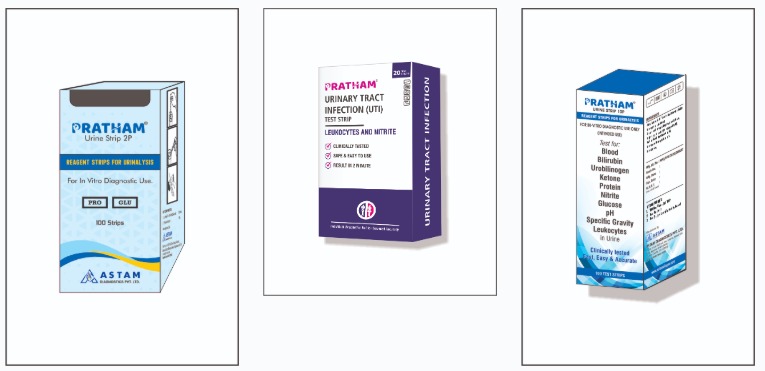
This is why the purpose of the test matters. In Astam Diagnostics’ urine-testing line, you can find the Pratham Urine Test Strip 10P, Urine Test Strip 2P, and a Urinary Tract Infection (UTI) Test Strip. The UTI strip is made to detect leukocytes and nitrites to support fast UTI screening.

Even so, a quick strip should be treated as a screening step. It is not a replacement for lab work in all cases. If you have symptoms or other clinical signs that need more detail, a healthcare professional may suggest extra testing.

Conclusion

Reliable urine strip results start before the strip is even opened. You need the sample to be collected well, kept properly, and handled with care. The dip must be done correctly, the read time must be watched, and the strip type must match what you are trying to check. In pathology labs, this matters even more because the workflow relies on set routines. In other healthcare settings, the same habits also help.

New reagent strips can speed up everyday screening. Still, the device cannot fix poor technique. The aim is not just to get an answer fast. The aim is to get an answer that you can trust, and to know when you should ask a clinician to review it.

Frequently Asked Questions (FAQs)

Q: Can dirt in the sample lead to a wrong result?  

A: Yes. Contamination can disturb some reactions and may make the test less dependable. A clean, dry container and the stated collection steps reduce that risk.

Q: Is it okay to use a strip after its expiry date?  

A: Avoid it. After expiry, the chemicals on the strip may not act as the maker claims. That can change how the color should be read.

Q: Why use a timer with urine strip tests?  

A: A timer helps you read the pad at the right moment. This lowers the chance of checking too soon or too late.

Q: Do all urine strip brands test the same markers?  

A: No. Each strip checks different things. Some are made for general urinalysis. Others are made for specific screening goals, such as markers linked to UTI.

Q: Does a positive urine strip result always mean there is a disease?

A: Not necessarily. A urine strip provides screening information, and sample quality, medications, physiological conditions, or other factors can sometimes influence results. An unexpected or concerning result should be interpreted in the appropriate clinical context and may require confirmatory testing.

📞 Phone: +011-45661377
📧 Email : info@astamdiagno.combd@astamdiagno.com
🌐 Website: www.astamdiagno.com

📩 Get in touch for business inquiries or orders.

Follow us on social media for updates: FacebookInstagramYouTubeTwitter and LinkedIn.