
facebook

Astam Diagnostics

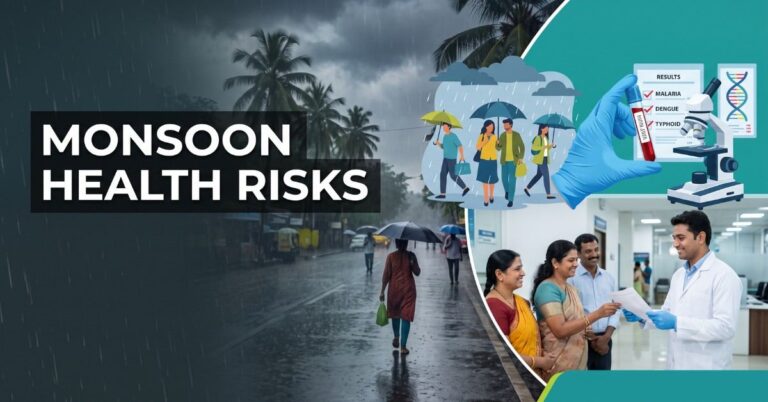
Monsoon Health Risks: Why Reliable Diagnostics Matter in India

Introduction

Every monsoon, the pattern repeats. The rain arrives, the heat finally breaks, and within a few weeks hospitals start seeing more patients walk in with fever. Dengue, Malaria, Typhoid, Leptospirosis, seasonal flu — on day one, a lot of these look identical. A patient with a 102°F fever and body aches could have any of them, and without a lab result, a doctor is essentially guessing at treatment.

This is why diagnostic testing carries so much weight during the monsoon months. It isn’t a formality that happens after the clinical exam — it’s often what tells a doctor whether to start antimalarials, order a platelet count for suspected dengue, or look somewhere else entirely. Get it wrong, or get it late, and every decision that follows gets shakier.

Why Monsoon Season Increases Diagnostic Demand

Standing water and increased mosquito breeding are the direct triggers, but the effect that matters most for hospitals and labs is the jump in testing volume. Waterborne and vector-borne illnesses spike together, often in overlapping case loads, which means the same lab team is suddenly processing far more samples than usual, frequently on the same day a patient is admitted.

Conditions typically responsible for this seasonal spike include:

  • Dengue and malaria, spread through mosquito breeding in stagnant water
  • Typhoid, linked to contaminated drinking water
  • Leptospirosis, common in flood-affected areas
  • Seasonal influenza, which spreads faster in crowded indoor settings during heavy rain

Because several of these present with overlapping symptoms, rapid test kits and lab-based confirmation both play a role in narrowing down the actual diagnosis quickly.

The Real Challenge Isn’t the Weather — It’s the Testing Volume

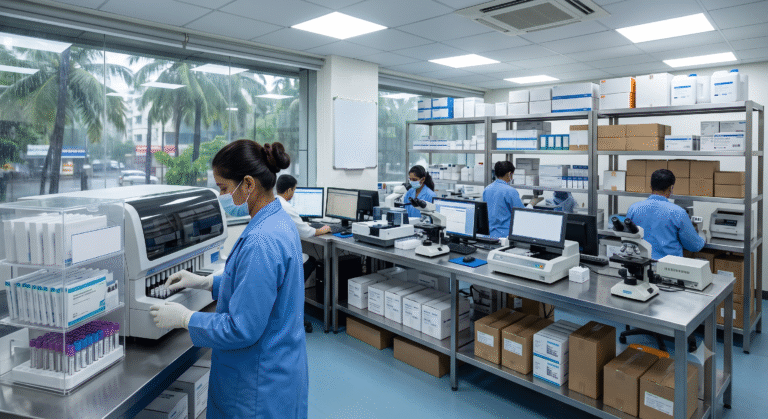
A lab that runs smoothly in April can still struggle in August, not because the science changed, but because the workload did. The same instruments, same staff, and same protocols now need to hold up under double or triple the usual sample count, with no room for a kit that underperforms or a reagent batch that behaves inconsistently.

This is where a lab’s infrastructure gets tested as much as the patients do. Reliable diagnostic testing during this period supports:

  • Faster clinical assessment when case loads are high
  • Fewer delays between sample collection and result
  • More confidence in results when volumes spike
  • Smoother day-to-day lab operations under pressure

What Labs Actually Need to Get Through Peak Season

None of this requires anything exotic — it just requires consistency at a moment when consistency is hardest to maintain. Labs that hold up well during monsoon typically have:

  • Kits and reagents that perform the same way on sample 200 as they did on sample 1
  • Equipment that doesn’t need constant recalibration mid-shift
  • Enough stock on hand that a delayed shipment doesn’t stall the queue
  • Staff who follow protocol properly on a chaotic day, not just a quiet one


A diagnostic supplier who’s actually reachable when a batch question comes up matters just as much.

How Astam Diagnostics Supports Healthcare Providers During Monsoon

At Astam Diagnostics, we supply IVD kits, ELISA kits, laboratory consumables, and diagnostic equipment to hospitals, diagnostic centres, and research labs across India. During the monsoon months in particular, demand for rapid test kits that detect infection markers such as dengue, malaria, typhoid, HBsAg, and HIV rises.

Shipping the product is the easy part. What actually matters is whether a kit performs the same way for the fiftieth lab that orders it as it did for the first one, and whether there’s someone to talk to when a lab has a question about a specific batch. That’s the part of the job we take seriously — not just supplying diagnostic products, but standing behind them when a lab is under pressure to deliver accurate results fast.

Building Preparedness Before the Peak Hits

Labs that come through monsoon in reasonably good shape usually did the unglamorous groundwork earlier in the year, not during the rush. That typically looks like:

  • Reviewing the inventory of essential test kits before the season starts
  • Keeping equipment maintenance on schedule instead of skipping a cycle
  • Sticking to standard quality control procedures even as volume increases
  • Making sure newer staff know protocols before, not during, peak demand

Partnering with a trusted diagnostic solutions provider that won’t disappear when stock runs low also makes a real difference.

None of this makes for an exciting internal memo. But it’s usually the difference between a lab whose turnaround time holds steady in August and one that’s noticeably behind by the second week of peak season.

Why This Matters Beyond a Single Test Report

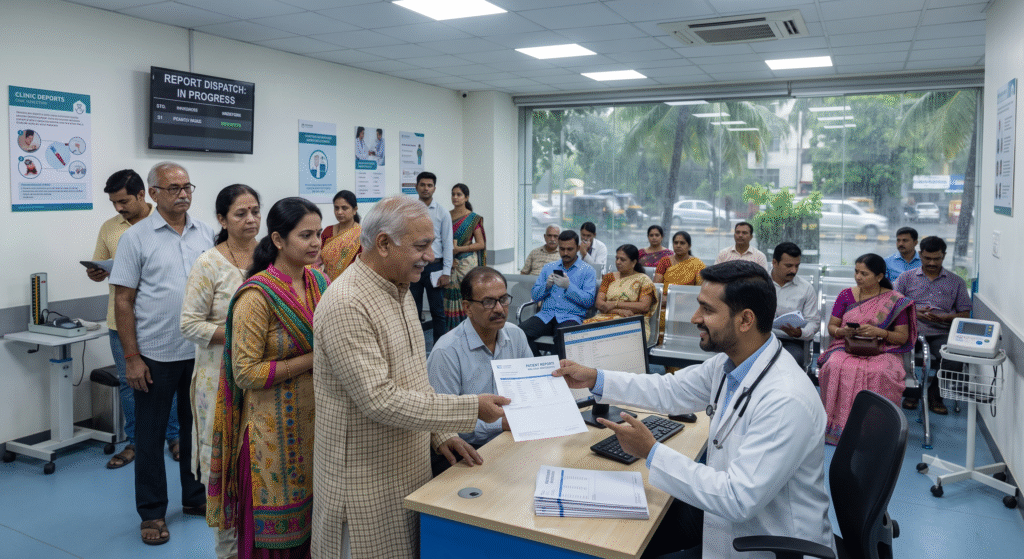
A fever test result isn’t just a data point sitting in a file. It shapes real decisions — starting treatment, isolating a suspected infection, tracking disease spread at a community level. When testing is accurate and timely, it supports better clinical decision-making, smoother patient management, and stronger disease surveillance overall.

As India’s healthcare infrastructure continues to expand, labs equipped with dependable diagnostic technology are likely to matter even more during high-demand periods like monsoon. Investing in reliable diagnostic solutions now is, in a very practical sense, preparation for whatever the next peak season brings.

Conclusion

Monsoon season is a reminder that healthcare preparedness starts well before patients start arriving at hospitals. Reliable diagnostic labs, consistent-quality IVD products, and dependable supplier relationships all support stronger clinical decisions during periods of high demand.

At Astam Diagnostics Pvt. Ltd., our focus stays on supporting healthcare professionals with diagnostic solutions that hold up under pressure — steady quality, steady consistency, and operations that keep running when the case load doubles. That’s the part of the job that actually counts during monsoon, and beyond it.

Frequently Asked Questions

Q: Why does diagnostic testing demand increase during monsoon season?

A: Monsoon conditions create more mosquito breeding and water contamination, which increases cases of dengue, malaria, typhoid, and leptospirosis — all of which require lab confirmation for accurate diagnosis and treatment.

Q: Why do many monsoon illnesses need lab confirmation instead of just a clinical exam?

A: Conditions like dengue, malaria, typhoid, and seasonal flu often present with overlapping symptoms such as fever and body aches, so laboratory testing helps confirm the exact cause before treatment begins.

Q: What should a diagnostic lab prioritise before monsoon season peaks?

A: Reviewing inventory of essential test kits, scheduling equipment maintenance, maintaining quality control procedures, and confirming staff are current on protocols — all before demand spikes, not during it.

Q: How does Astam Diagnostics support labs during high-demand periods like monsoon?

A: Astam Diagnostics supplies rapid test kits, ELISA kits, and diagnostic equipment for infectious diseases, with a focus on consistent batch-to-batch performance and responsive support when labs have questions.

Q: Does reliable diagnostic testing actually reduce healthcare costs during monsoon?

A: Yes. Faster, accurate diagnosis reduces unnecessary treatment delays, supports earlier clinical intervention, and helps prevent complications that come from late or incorrect diagnosis.

📞 Phone: +011-45661377
📧 Email : info@astamdiagno.combd@astamdiagno.com
🌐 Website: www.astamdiagno.com

📩 Get in touch for business inquiries or orders.

Follow us on social media for updates: FacebookInstagramYouTubeTwitter and LinkedIn.