


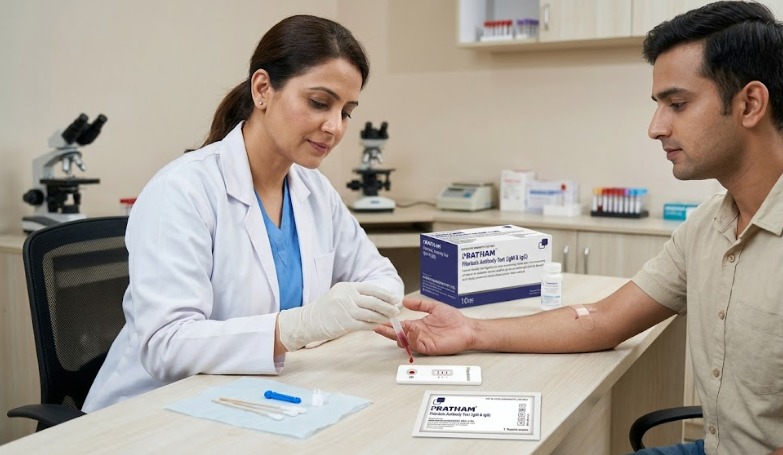
Product Insight: Filariasis Antibody Test by Astam Diagnostics
Astam Diagnostics Pvt. Ltd. developed the Filariasis Antibody Test to enable fast and dependable detection of filarial antibodies. The product information reveals essential features which include:
- The test detects filariasis antibodies in a rapid and direct manner
- The test system serves both clinical laboratories and point-of-care testing locations
- The test system requires only basic skills for operation through its user-friendly design
- The system enables medical professionals to perform tests in regions where the disease exists
The current demand for diagnostic solutions needs to meet the requirements of the Indian population, who need to undergo regular health assessments
Importance in Public Health Programs
India’s elimination programs depend on diagnostic tools to assess disease distribution and determine the required control measures. Antibody testing supports these initiatives by identifying infected individuals early and helping reduce transmission cycles.
Improved diagnostic tools fix one of the main issues, which recent studies showed as a problem because of missing tests and insufficient detection abilities, which create obstacles to proper disease control.
Conclusion
Filariasis remains a major public health issue which affects India and various tropical nations. The front line of disease control measures requires both extensive treatment initiatives and precise early diagnosis methods.
The Filariasis Antibody Test functions as a crucial diagnostic tool which helps detect infections at an early stage while it enables disease monitoring and clinical decision-making processes. The development of rapid testing technology, combined with backing from Astam Diagnostics, brings renewed optimism to the worldwide mission of eradicating lymphatic filariasis within the upcoming years.
By integrating reliable diagnostics with preventive strategies, healthcare systems can move closer to a filariasis-free world.
 Phone: +011-45661377
 Email : info@astamdiagno.com, bd@astamdiagno.com
 Website: www.astamdiagno.com
 Get in touch for business inquiries or orders.
Follow us on social media for updates: Facebook, Instagram, YouTube, Twitter and LinkedIn.