

Every parent wants their children to be happy and healthy. However, when children fall ill, they are often unable to articulate what is wrong. In such situations, you should pay attention to subtle cues—for instance, if your child becomes unusually quiet, refuses their favourite food, or shows a change in their sleep patterns. Knowing some basic ways to monitor your child’s health at home can be incredibly helpful.
This Children’s Day 2026, let’s talk about children’s health and explore simple steps parents can take to safeguard their well-being. In this blog, we will discuss five health-related checks you can perform at home. We will also look at how to identify common symptoms, when to consult a doctor, and how to create a home environment that supports your child’s health.
Children are naturally full of energy—running around, climbing, and asking countless questions throughout the day. Therefore, if your child suddenly becomes quiet, loses interest in play, or refuses to eat, you will likely notice it. Never ignore these signs.
Changes in eating habits, sleep patterns, or energy levels can be indicators of an underlying illness. Keep an eye out for symptoms like fever, a cough, vomiting, or excessive fatigue. Over time, you will become familiar with your child’s typical behaviour, making it easier to recognize when something might be amiss.
Essentially, it is about paying close attention to your child so you can determine when it is necessary to see a doctor.
For parents of young children, fever is perhaps the most common cause for concern. One moment a child might be playing happily, and a few hours later, they may become tired, irritable, and show a lack of interest in eating or drinking.
A fever is defined as a body temperature of 38°C or higher. Measure the temperature accurately and, if necessary, note down the reading. However, do not focus solely on the number; observe how your child is behaving. Are they drinking enough fluids? Are they responding normally? Do they seem unusually weak? This information will be very useful for your paediatrician. Do not administer any medication without consulting a doctor. Also, keep in mind: if a child under three months of age has a fever of 38°C or higher, seek medical attention immediately.

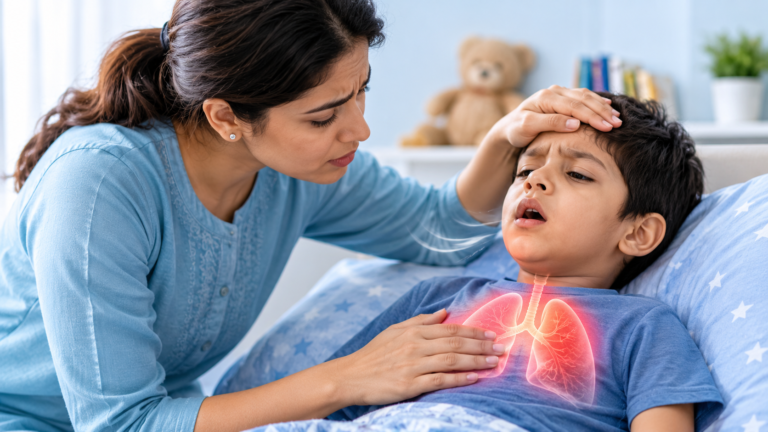
Pay close attention to how your child breathes, especially when they have a cough, cold, or chest infection. There are certain signs that you should never ignore:
Some signs require immediate emergency assistance—for example, if the lips turn slightly blue or grey, if there is severe difficulty breathing, if breathing stops intermittently, or if the child suddenly loses consciousness. Do not wait, and do not assume that the situation will resolve on its own. If your child already has a pre-existing respiratory condition, follow the care plan provided by your doctor, and be sure to consult them if any symptoms worsen.
It is natural to feel worried when your child is ill. Many parents repeatedly check for symptoms or assess their child’s condition every few minutes, just to ensure everything is fine. But is all of this really necessary? Not necessarily.
Monitoring at home is appropriate when advised by a doctor—typically for children with specific medical conditions. A mild cough, a common cold, or slight restlessness does not mean your child immediately requires medical testing.
A better approach is quite simple: keep an eye on symptoms and consult your paediatrician when necessary. Based on the child’s age, symptoms, and medical history, the doctor can determine whether further monitoring or testing is required.

While medical care is essential, everyday habits are equally important. For instance, ensure regular handwashing.
These small measures make a significant difference. Keep medications and health-related supplies out of children’s reach, and follow the storage instructions provided on the packaging. If you use reusable health equipment at home, store it in a clean, appropriate place as directed by the manufacturer.
Maintaining a small health diary can also be helpful; you can use it to record recurring symptoms, body temperature (when advised by a doctor), and any guidance received during medical consultations. This will make future doctor visits easier and help you feel more organized.
You don’t need grand gestures to show children love. They simply need your attention, your understanding, and a healthy home environment in which to grow and thrive. This Children’s Day 2026, you can make a significant difference by adopting a few simple habits: learn to recognize symptoms of a fever, measure temperature correctly, keep an eye out for any breathing difficulties, and follow your doctor’s advice.
At Astam Diagnostics, we believe that better healthcare begins with awareness and informed decision-making. Would you like to learn more about us and our healthcare initiatives? Please visit our official website or read our ‘About Us‘ section.
Let’s prioritize children’s health—not just on Children’s Day, but every single day.
Q. What essential health checks should parents perform for their children at home?
A. Monitor your child’s body temperature, breathing patterns, appetite, sleep, and general behaviour. If anything seems unusual or concerning, consult a doctor.
Q. At what temperature is a child considered to have a fever?
A. Generally, a temperature of 38°C (100.4°F) or higher is considered a fever. However, one should also consider the child’s age, the method used to measure the temperature, and any other accompanying symptoms.
Q. When should parents take their child to the doctor if they have a fever?
A. If the fever does not subside, symptoms worsen, or the child appears very unwell, consult a doctor. For infants under three months old, a temperature of 38°C or higher warrants immediate medical advice.
Q. What are the warning signs of breathing difficulties in children?
A. Rapid breathing, wheezing or audible sounds while breathing, the chest sinking inward during inhalation, and visible signs of struggle while breathing are all warning signs. If a child experiences severe difficulty breathing, their lips turn blue or grey, or there are pauses in their breathing, seek emergency medical assistance immediately.
Q. Why is regular monitoring of a child’s health important?
A. It allows you to quickly notice any changes, helps in tracking recurring symptoms, and ensures that you can seek medical advice at the right time.
Phone: +011-45661377
Email : info@astamdiagno.com, bd@astamdiagno.com
Website: www.astamdiagno.com
Get in touch for business inquiries or orders.
Follow us on social media for updates: Facebook, Instagram, YouTube, Twitter and LinkedIn.