


What should you know before taking an H. pylori test?
There are several drugs that can interfere with the H. pylori test. Proton pump inhibitors, antibiotics, and bismuth containing drugs need to be discontinued before a test of cure or prior to testing in appropriate circumstances. However, it is important to note that these medications should only be discontinued at the recommendation of a healthcare professional. Furthermore, current ACG guidelines recommend using a fecal antigen test, urea breath test, or biopsy at appropriate intervals to confirm eradication.
Conclusion
While not all cases of acidity are attributed to H. pylori, persistent gastrointestinal symptoms call for more than a round of antacids. Knowing the possible link between H. pylori, gastritis and ulcers can help you get the treatment you need at the right time. A non-invasive H. pylori stool antigen test can be an important step when considering more invasive procedures. With diagnostic solutions such as the Astam Diagnostics H. pylori Antigen Test, healthcare professionals and laboratories can rely on rapid testing for H. pylori antigen detection.
Frequently Asked Questions (FAQs)
Q: What is an H. pylori stool antigen test?
A: An H. pylori stool antigen test is a non-invasive test that uses a stool sample for the detection of H. pylori antigens. The test is used for diagnosis and, when indicated, post-eradication follow-up testing.
Q: Can H. pylori cause stomach ulcers?
A: Yes, H. pylori infection can lead to peptic ulcers. However, persistent stomach pain is not enough to confirm an ulcer or H. pylori infection. Medical evaluation and appropriate diagnostic testing are always necessary.
Q: Is a stool antigen test less invasive than endoscopy?
A: Yes, a stool test is less invasive than an endoscopy procedure. An endoscopy, on the other hand, is an invasive procedure wherein a flexible tube is passed through the mouth to view the upper digestive tract. Endoscopy is generally reserved for when additional evaluation is needed.
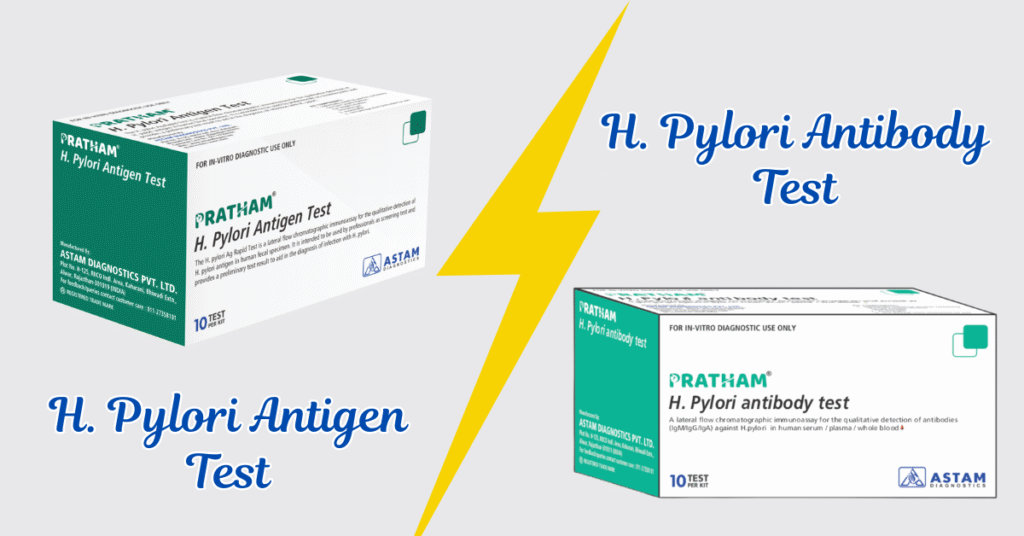
Q: What is the difference between H. pylori antigen and antibody tests?
A: An antigen test detects the antigens of the H. pylori bacteria. An antibody test, on the other hand, is used to detect the antibodies produced by the body in reaction to the H. pylori infection. The two tests are markedly different in use and purpose. As per guidelines, antibody tests should not be used as a substitute for non-serologic tests for diagnosis of an active H. pylori infection.
Q: When should I talk to a doctor about stomach pain?
A: Persistent stomach pain that recurs or does not subside should always be evaluated by a healthcare professional. If you also have accompanying symptoms such as sudden intense pain, vomiting, weight loss, blood in the stools, or black colored stools, you should seek medical evaluation as soon as possible.
 Phone: +011-45661377
 Email : info@astamdiagno.com, bd@astamdiagno.com
 Website: www.astamdiagno.com
 Get in touch for business inquiries or orders.
Follow us on social media for updates: Facebook, Instagram, YouTube, Twitter and LinkedIn.