
How Do Indian Diagnostic Manufacturers Help B2B Buyers?
You can explain what you need on a call, plan restocking with someone in your own time zone, and close deals faster. Faster delivery isn’t automatic though. It depends on stock, capacity, location and order size, so get delivery commitments in writing.
We work with distributors, wholesalers, hospitals and labs, and our range covers rapid kits, ELISA kits and diagnostic devices. Bulk supply and OEM or private-label work are on the table too. Our product portfolio and company services pages are a good place to start.
What Comes Next for Made-in-India MedTech?
Domestic manufacturing is growing, and buyers finally have a choice. But picking “Indian-made” isn’t the finish line. You still need to look at performance evidence, compliance, quality systems, pricing, and whether a supplier can deliver month after month without drama.
If you’re hunting for an Indian diagnostic supplier, Astam Diagnostics is worth a conversation. Do your document checks, ask the awkward questions, and you can back local manufacturing without lowering your standards. Make in India opens the door. Careful buying gets you through it.
FAQs
Q. Where can hospitals buy rapid diagnostic test kits in India?
Hospitals, labs and distributors can contact Astam Diagnostics to see the range. Before ordering, confirm availability, intended use and regulatory documents.
Q. Does Astam Diagnostics offer rapid test kits and ELISA kits?
Yes, Astam Diagnostics lists rapid test kits, ELISA kits, and medical diagnostic devices among its core product categories. Send an enquiry through the website to check current availability.
Q. Are Indian-made diagnostic kits as accurate as imported ones?
Accuracy comes from validation, intended use, testing and manufacturing quality, not the country on the label. Buyers evaluating Astam Diagnostics products should request relevant performance data, product documentation, and applicable regulatory details to determine whether a particular kit meets their requirements.
Q. Can distributors ask for bulk orders or OEM manufacturing?
Yes. Astam offers bulk supply and OEM or private-label manufacturing for B2B enquiries. Reach out through the website and tell us what you’re planning.
Q. How can buyers verify the quality and compliance of a diagnostic kit?
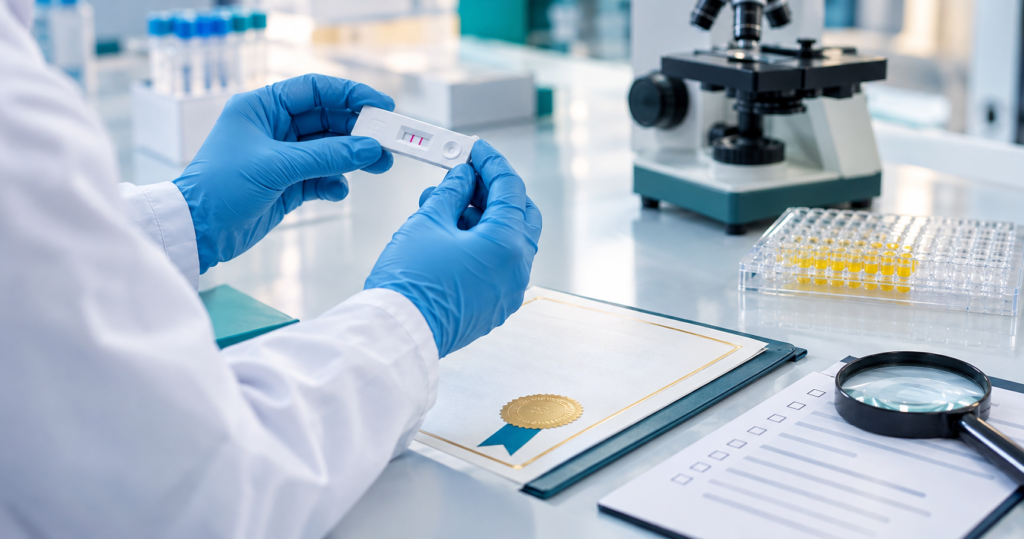
Start with the paperwork: CDSCO licences, specifications, performance evidence, batch documents, storage requirements and quality certificates. Verify the ISO 13485:2016 and CE documents for each product before buying. The CDSCO IVD guidance has more.
 Phone: +011-45661377
 Email : info@astamdiagno.com, bd@astamdiagno.com
 Website: www.astamdiagno.com
 Get in touch for business inquiries or orders.
Follow us on social media for updates: Facebook, Instagram, YouTube, Twitter and LinkedIn.